


These five leaks turn up in almost every founder-led business we look at. None appear in a profit and loss statement, which is why they last. Each has a two-minute check.
1. The slow first reply
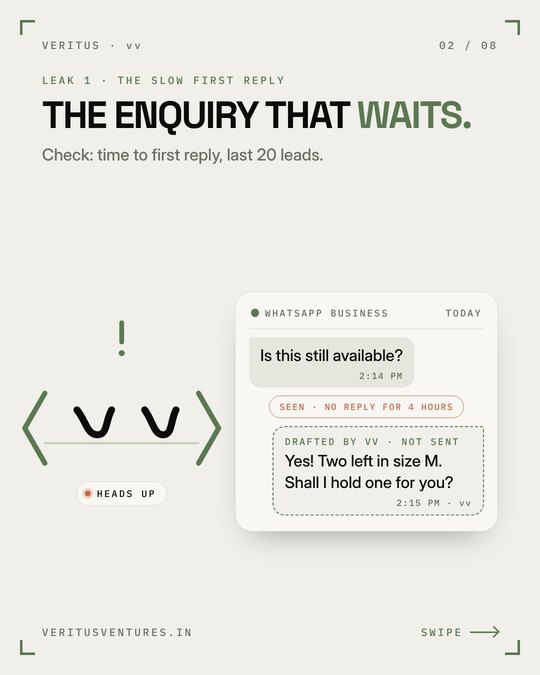
An enquiry that waits is an enquiry that goes elsewhere. Check: note the time to first reply for your last 20 leads. Anything over an hour, or any reply the next morning, is a leak. A widely cited 2011 HBR study found firms replying within an hour were far more likely to qualify a lead; it was a US study, so treat it as direction, not a promise.
2. The quiet customer
Regulars do not announce they are leaving. Their visits thin out. Check: list who came last month but not this month. Call one of them this week.
3. The vague follow-up
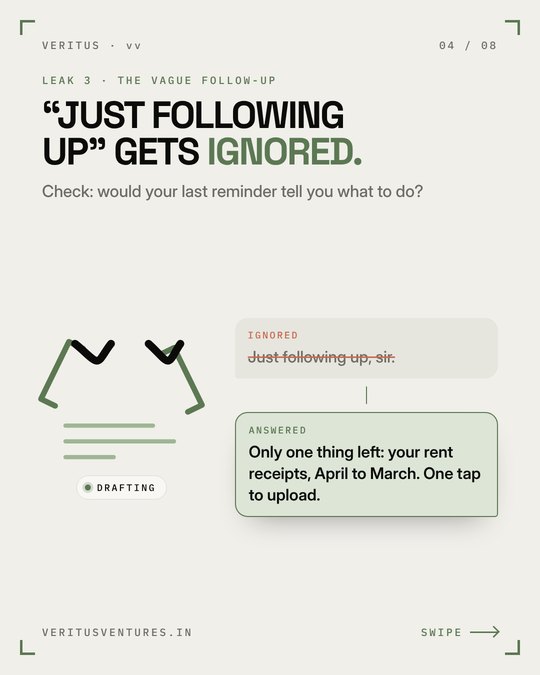
“Just following up, sir” gets ignored. A message that says what is missing and how to send it gets answered. Check: would your last reminder tell the reader exactly what to do?
4. The hand-off
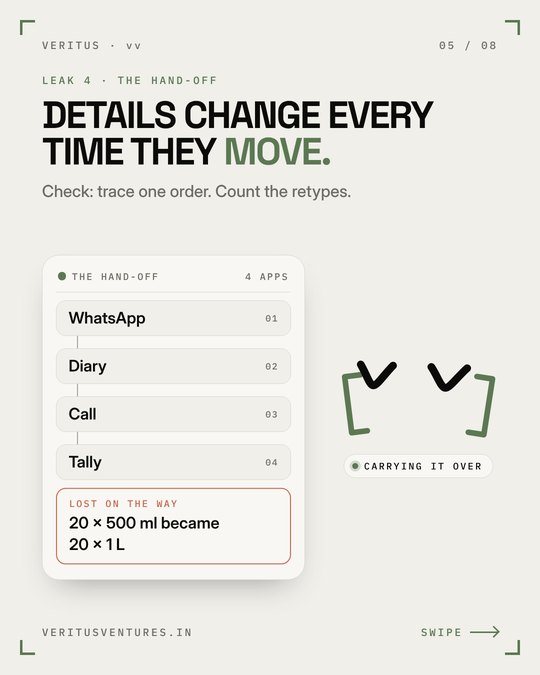
Details change each time they move between WhatsApp, a diary, a call and your accounts software. One order we describe in a story went from 20 cartons of 500 ml to 20 of 1 litre in transit. Check: trace one order and count the retypes.
5. The missing morning
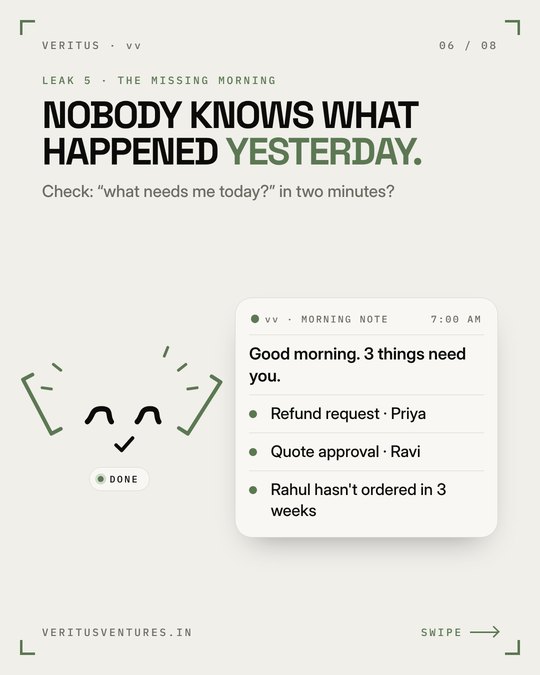
Nobody knows what happened yesterday. Check: can you answer “what needs me today?” in two minutes?
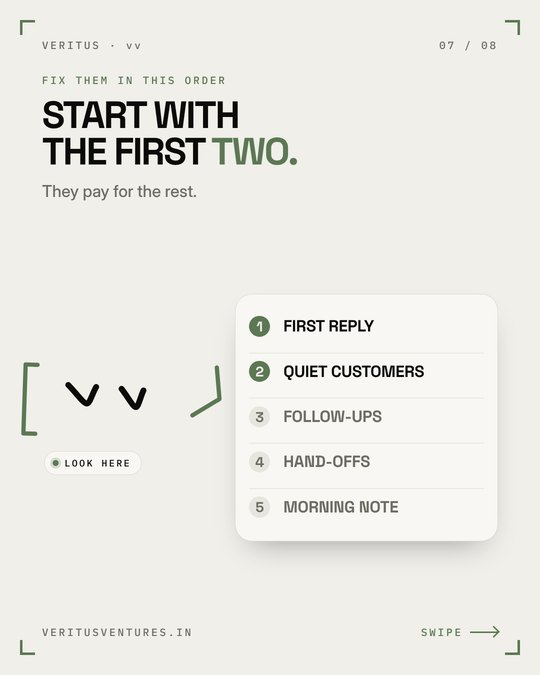
Fix them in this order
First reply, quiet customers, follow-ups, hand-offs, then the morning note. The first two pay for the rest.
Take the 60-second leak check for a score, or read the full guide: how to fix a business that depends on you.
Which leak hurts most?
Tell Abhisar the leak and your business type, and you will get where to start.
Message Abhisar on WhatsApp →Frequently asked questions
What are the most common leaks in a small business?
Slow first replies, customers who quietly stop coming, vague follow-ups, details lost when work moves between apps, and nobody knowing what happened yesterday.
Which leak should I fix first?
The slow first reply, then the quiet customer. They usually pay back fastest and need the least setup.